
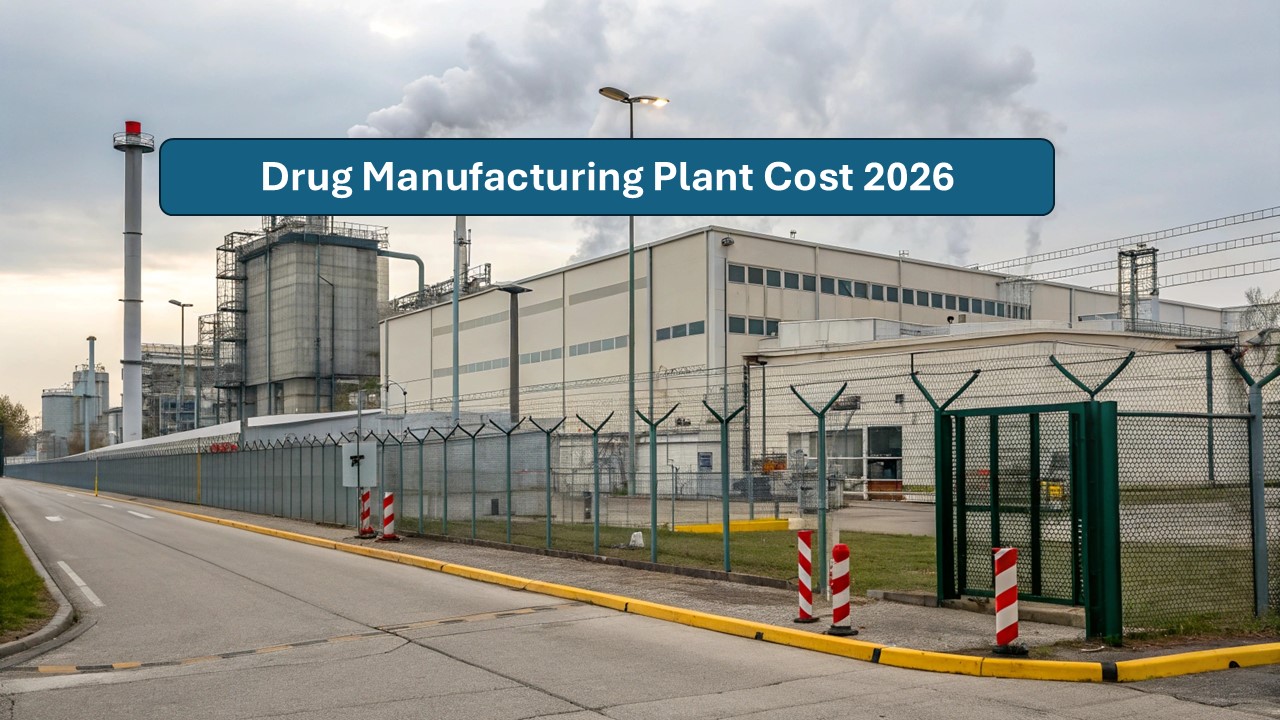
The Drug Manufacturing Plant Project Report 2026 by IMARC Group provides a complete feasibility analysis and investment outlook for establishing a commercial drug manufacturing facility. Drugs — chemical and biological substances used to prevent, diagnose, treat, or manage diseases and medical conditions — are essential components of modern healthcare systems. They come in various forms such as tablets, capsules, injectables, creams, and inhalers, and must meet rigorous quality, safety, and regulatory standards. A well-planned drug manufacturing plant combines advanced technology, quality control, regulatory compliance, and efficient process design to produce high-quality pharmaceutical products in large volumes.
The IMARC report covers key aspects of project planning such as process flow, raw material requirements, plant layout considerations, utility requirements, machinery and technology needs, manpower planning, packaging and transportation requirements, cost structure, financial analysis, profitability projections, and investment viability. This makes it a valuable resource for entrepreneurs, investors, and pharmaceutical industry professionals looking to enter or expand in the drug manufacturing sector.
Market Overview and Growth Potential
The global drug manufacturing industry is experiencing continued expansion due to rising healthcare needs, an increasing prevalence of chronic diseases, and advancements in biotechnology and drug delivery systems. The aging global population and growing demand for affordable, high-quality medicines further support the expansion of manufacturing capacity worldwide. Health systems are investing in local drug production capabilities to meet demand, reduce dependency on imports, and enhance supply chain resilience.
Although the IMARC public summary does not disclose specific market size and CAGR values, it highlights that the industry’s growth is underpinned by factors such as a surge in biotechnology applications, heightened global healthcare spending, and a shift toward personalized medicines and advanced therapeutic solutions.
Request for a Sample Report: https://www.imarcgroup.com/drug-manufacturing-plant-project-report/requestsample
Plant Capacity and Production Scale
According to the IMARC report, the proposed drug manufacturing facility is designed with an annual production capacity ranging between 500 million tablets. This capacity enables economies of scale while maintaining the flexibility needed to accommodate varying production volumes, dosage forms, and product portfolios.
The production process generally includes a series of unit operations such as formulation, blending, granulation, tablet compression, coating, filling, and packaging. Each stage must adhere to Good Manufacturing Practices (GMP) and stringent quality assurance protocols to ensure product safety and efficacy.
Financial Viability and Profitability Analysis
The IMARC analysis shows that drug manufacturing can deliver strong profitability under normal operating conditions. Based on the information provided:
• Gross Profit Margin: 55–65%
• Net Profit Margin: 25–35%
These profit margins reflect the high value-added nature of finished pharmaceutical products and stable long-term demand. They are supported by consistent consumption patterns in healthcare systems and value derived from drug formulations that command sustainable pricing. The report also includes detailed projections covering revenue, operating costs, capital recovery, break-even analysis, net present value (NPV), return on investment (ROI), and profit-and-loss projections — which together help investors assess the long-term financial viability of the project.
Operating Cost Structure
Operating costs form a significant proportion of the total expenditure in a drug manufacturing plant. As outlined in the IMARC report:
• Raw Materials: 40–50% of total operating expenses (OpEx)
• Utilities: 20–25% of OpEx
The largest expense comes from raw materials, particularly APIs (Active Pharmaceutical Ingredients) and excipients such as binders, fillers, and disintegrants required for formulation. Reliable sourcing and long-term contracts are critical to managing costs and ensuring consistent production quality. Utilities — including electricity, water, compressed air, steam, and HVAC systems necessary for GMP compliance and cleanroom operations — represent another key component of operating expenses. Other OpEx items such as labor, quality control, packaging, transportation, maintenance, and regulatory compliance are also included in the comprehensive cost model.
Capital Investment Requirements
Establishing a drug manufacturing facility involves multiple capital expenditure components, as detailed by IMARC:
• Land Acquisition and Site Development: Strategic site selection with access to road transport, utilities, and waste management systems.
• Civil Works and Construction: Building production halls, quality control laboratories, raw material and finished goods storage areas, HVAC-compliant cleanroom spaces, administrative offices, and utility infrastructure.
• Machinery and Equipment: Core equipment includes reactors or synthesis systems, filtration and purification units, granulators, tablet presses, capsule fillers, coating machines, automated packaging lines, and quality testing instruments.
• Utilities and Support Systems: Electrical installations, water systems, steam generation, compressed air systems, safety systems, and environmental compliance equipment.
The total capital investment depends on factors such as plant scale, technology selection, level of automation, and local infrastructure costs. The report’s CapEx framework assists investors in budgeting and financial planning by outlining major cost categories, although specific monetary figures are part of the full proprietary report.
Major Applications and Market Segments
Drug products manufactured in the facility serve several critical applications, including:
• API Production and Formulation: Active ingredient synthesis and formulation into finished dosage forms such as tablets and capsules.
• Sterile Manufacturing: Aseptic processing for sterile products, injectable formats, and vial or ampoule filling.
• Packaging & Labeling: Blister packaging, serialization, and tamper-evident systems for distribution and compliance.
• Controlled Release and Specialty Drugs: Advanced formulations for chronic disease management and personalized therapy.
These applications highlight the diverse product portfolio that a drug manufacturing facility can support, from standard solid-dose products to sterile and high-value formulations.
Why Invest in Drug Manufacturing?
The IMARC report highlights several compelling reasons to invest in drug manufacturing:
Growing Healthcare Demand
An aging population and rising prevalence of chronic diseases such as diabetes, cardiovascular disorders, and respiratory conditions drive global demand for pharmaceutical products.
Value-Added Manufacturing
Drug manufacturing adds significant value by transforming raw APIs and excipients into finished products that command strong pricing power and long-term demand.
Technological Advancements
Innovations in biotechnology, drug delivery systems, and formulation technology enhance production efficiency, product quality, and therapeutic efficacy.
Regulatory and Policy Support
Governments and healthcare regulators support domestic pharmaceutical manufacturing to ensure supply chain resilience, quality standards, and local availability of essential medicines.
Export Potential
Countries with strong pharmaceutical infrastructure (e.g., India, China, and others) have developed export capabilities, making drug manufacturing an attractive sector for global trade.
Collectively, these factors make the drug manufacturing industry a strategic and economically viable investment, aligned with global healthcare priorities.
Ask Analyst for Customization: https://www.imarcgroup.com/request?type=report&id=22211&flag=C
Leading Drug Manufacturers:
Leading manufacturers in the global drug industry include several multinational companies with extensive production capacities and diverse application portfolios. Key players include:
- Pfizer Inc.
- Johnson & Johnson
- Novartis AG
- Bristol-Myers Squibb
- GSK (GlaxoSmithKline)
all of which serve end-use sectors such as healthcare, hospitals, clinics, pharmacies, biotechnology.
Looking for expert solutions? Explore our specialized services below:
Contract Manufacturer Identification services: https://www.imarcengineering.com/services/contract-manufacturer-identification
How IMARC Can Help?
IMARC Group is a global management consulting firm that helps the world's most ambitious changemakers to create a lasting impact. The company provide a comprehensive suite of market entry and expansion services. IMARC offerings include thorough market assessment, feasibility studies, company incorporation assistance, factory setup support, regulatory approvals and licensing navigation, branding, marketing and sales strategies, competitive landscape and benchmarking analyses, pricing and cost research, and procurement research.
Services:
- Plant Setup
- Factoring Auditing
- Regulatory Approvals, and Licensing
- Company Incorporation
- Incubation Services
- Recruitment Services
- Marketing and Sales
Contact Us:
IMARC Group
134 N 4th St. Brooklyn, NY 11249, USA
Email: sales@imarcgroup.com
Tel No:(D) +91 120 433 0800
United States: +1-201971-6302