
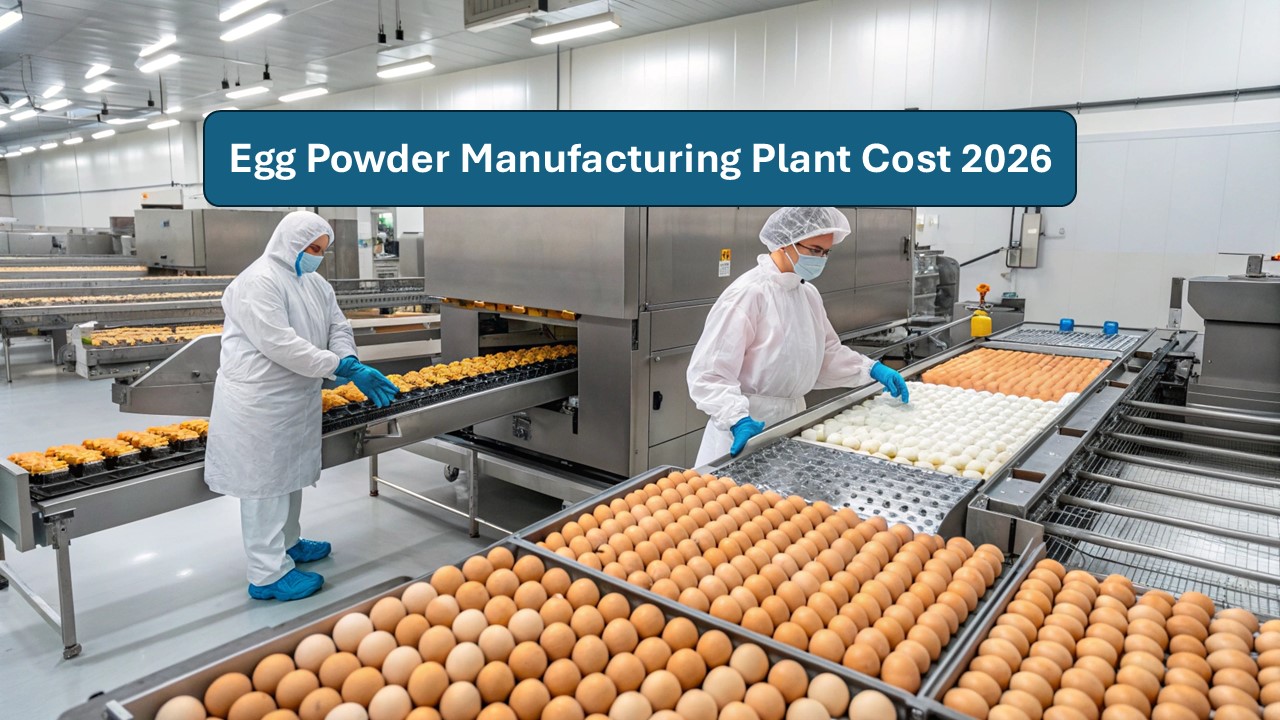
The Egg Powder Manufacturing Plant Setup Cost 2026 by IMARC Group presents a thorough feasibility analysis and investment blueprint for establishing a manufacturing facility that produces egg powder — a dehydrated, shelf-stable form of egg that retains essential nutrients and is easy to store, transport, and use across multiple industries. Egg powder is produced by removing moisture from fresh eggs through specialized drying techniques such as spray drying. This process transforms liquid eggs into a convenient powdered form suitable for use in food processing, bakery applications, nutraceutical formulations, cosmetics, and other industrial uses.
The IMARC report provides insights into market trends, production processes, raw material requirements, utility and infrastructure needs, machinery and technology selection, cost structures, profitability analysis, and financial projections. It serves as a valuable resource for entrepreneurs, food processors, manufacturers, and investors evaluating the potential of entering the egg powder production market.
Market Overview and Growth Potential
According to the IMARC Group, the global egg powder market was valued at USD 2,093.29 Million in 2025 and is expected to reach USD 2,900.43 Million by 2034, exhibiting a CAGR of 3.7% from 2026 to 2034. This growth is driven by increasing demand for shelf-stable ingredients in food processing and baking industries, expanding use in dietary supplements due to high protein content, and rising utility in pharmaceuticals and cosmetics sectors.
Egg powder is gaining traction due to its functional properties, longer shelf life, and ease of incorporation into a wide range of products compared with fresh eggs, which are perishable and require refrigeration. This expanding scope across end-use industries enhances the market opportunity for manufacturers and investors alike.
Request for a Sample Report: https://www.imarcgroup.com/egg-powder-manufacturing-plant-project-report/requestsample
Plant Capacity and Production Scale
The IMARC report indicates that a typical egg powder manufacturing facility can be designed with an annual production capacity of approximately 2,000–10,000 metric tons (MT). This production scale enables producers to achieve economies of scale, maintain operational flexibility, and meet demand from diverse customer segments, including food processors, bakeries, nutraceutical manufacturers, and cosmetic producers.
The production process typically involves egg selection and preparation, breaking and separation, pasteurization, drying (commonly spray drying), cooling, grinding, sieving, quality inspection, and packaging. Efficient process design and modern machinery help ensure product consistency, safety, and cost-effective operations.
Financial Viability and Profitability Analysis
The IMARC Group’s financial assessment highlights the profitability potential for an egg powder manufacturing plant under normal operating conditions:
• Gross Profit Margin: 20–30%
• Net Profit Margin: 8–15%
These profit margins reflect the value addition achieved by converting perishable fresh eggs into a versatile, long-lasting product with multiple industrial applications. The diversified use of egg powder across food processing, health nutrition, and cosmetic formulations helps support stable demand and favorable pricing, contributing to strong financial performance.
The report’s detailed financial models include projections of capital cost, operating expenses, income and expenditure forecasts, break-even analysis, return on investment (ROI), net present value (NPV), and long-term profitability scenarios to help investors assess economic viability.
Operating Cost Structure
Operating costs constitute a significant portion of total project expenses for an egg powder plant. According to the IMARC report:
• Raw Materials: 80–85% of total operating expenses (OpEx)
• Utilities: 10–15% of OpEx
Fresh eggs, the primary raw material, form the most substantial share of operating expenses due to their high volume and cost relative to other inputs. Utilities — such as electricity and water used in pasteurization, drying, cooling, and packaging — represent a smaller but essential part of ongoing operational costs.
Other operational expenditures, such as labor, maintenance, quality control, packaging, logistics, and regulatory compliance, are also included in the comprehensive cost model but typically account for a smaller portion of total OpEx compared to raw material and utility costs.
Capital Investment Requirements
Establishing an egg powder manufacturing facility requires investment across several major components as highlighted in the IMARC report:
• Land Acquisition and Site Development: Selecting a strategic site with access to raw material supply chains, transportation infrastructure, utilities, and waste management systems.
• Civil Works and Infrastructure: Construction of production buildings, raw material storage areas, quality control labs, packaging sections, finished goods warehousing, administrative offices, and safety and utility installations.
• Machinery and Equipment: Key equipment includes egg breaking and separation systems, pasteurizers, spray dryers, cooling systems, grinders, sieving units, conveyors, quality inspection instruments, and automated packaging machinery.
• Utilities and Support Services: Installation of electrical systems, water supply networks, compressed air systems, safety systems, and environmental compliance facilities.
The detailed capital expenditure breakdown, including specific cost figures, is provided in the full IMARC report to assist investors in budgeting and financial planning based on selected capacity, technology level, and automation.
Major Applications and Market Segments
Egg powder produced from the plant serves multiple applications across industrial and consumer sectors:
• Food Processing and Bakery: Used as an ingredient in baked goods, confectionery, pasta, sauces, and snack foods due to its nutritional and functional properties.
• Nutraceuticals and Supplements: Incorporated into high-protein dietary supplements and fitness nutrition products.
• Pharmaceutical and Cosmetic Industries: Used in formulations requiring protein-rich ingredients or functional egg components.
• Convenience and Ready-to-Eat Foods: Used in packaged food products where consistent quality and longer shelf life are required.
These diversified applications enhance the stability and growth prospects of the egg powder market by expanding demand across food, health, and industrial sectors.
Why Invest in Egg Powder Manufacturing?
Investing in an egg powder manufacturing plant offers several strategic advantages as outlined by the IMARC report:
Growing Demand for Shelf-Stable Proteins
With increasing demand for convenience foods, ready-to-eat products, and high-protein formulations, egg powder serves as an essential ingredient that combines nutritional value with ease of handling.
Multipurpose Industrial Applications
Egg powder’s utility across food processing, nutraceuticals, pharmaceuticals, and cosmetics provides diversified revenue streams and reduces dependency on any single market segment.
Extended Shelf Life and Logistics Efficiency
Being moisture-free and non-perishable, egg powder reduces storage and transportation costs compared with fresh eggs, offering logistical advantages for manufacturers and distributors.
Value Addition and Product Innovation
Manufacturers can offer value-added variants such as whole egg powder, egg white powder, and egg yolk powder to cater to specific customer needs, enhancing market reach and profitability.
Together, these factors make egg powder manufacturing a compelling opportunity for agribusiness investors, food industry entrepreneurs, and manufacturers targeting long-term growth in nutritious and functional food ingredients.
Ask Analyst for Customization: https://www.imarcgroup.com/request?type=report&id=8560&flag=C
Leading Egg Powder Manufacturers:
Leading manufacturers in the global egg powder industry include several multinational companies with extensive production capacities and diverse application portfolios. Key players include:
- Rose Acre Farms, Inc.
- Ovostar Union N.V.
- Rembrandt Enterprises, Inc.
- Sanovo Egg Group
- Kewpie Corporation
- Bouwhuis Enthoven BV
- Eierhandel Wulro B.V.
all of which serve end-use sectors such as food & beverage, nutraceuticals & supplements, pharmaceuticals, and cosmetics & personal care.
Conclusion
The Egg Powder Manufacturing Plant Project Report 2026 by IMARC Group provides a comprehensive, data-driven framework for evaluating and planning an egg powder production facility. With an annual production capacity of 2,000–10,000 MT, attractive profitability margins (gross 20–30%, net 8–15%), a cost structure dominated by raw materials and utilities, and broad applications across food, health, and industrial sectors, egg powder manufacturing presents a viable and scalable investment opportunity. Supported by growing global demand for convenient, high-protein ingredients and expanding use across multiple industries, this venture offers promising long-term prospects for investors and entrepreneurs entering the food and nutrition space.
How IMARC Can Help?
IMARC Group is a global management consulting firm that helps the world's most ambitious changemakers to create a lasting impact. The company provide a comprehensive suite of market entry and expansion services. IMARC offerings include thorough market assessment, feasibility studies, company incorporation assistance, factory setup support, regulatory approvals and licensing navigation, branding, marketing and sales strategies, competitive landscape and benchmarking analyses, pricing and cost research, and procurement research.
Services:
- Plant Setup
- Factoring Auditing
- Regulatory Approvals, and Licensing
- Company Incorporation
- Incubation Services
- Recruitment Services
- Marketing and Sales
Contact Us:
IMARC Group
134 N 4th St. Brooklyn, NY 11249, USA
Email: sales@imarcgroup.com
Tel No:(D) +91 120 433 0800
United States: +1-201971-6302