
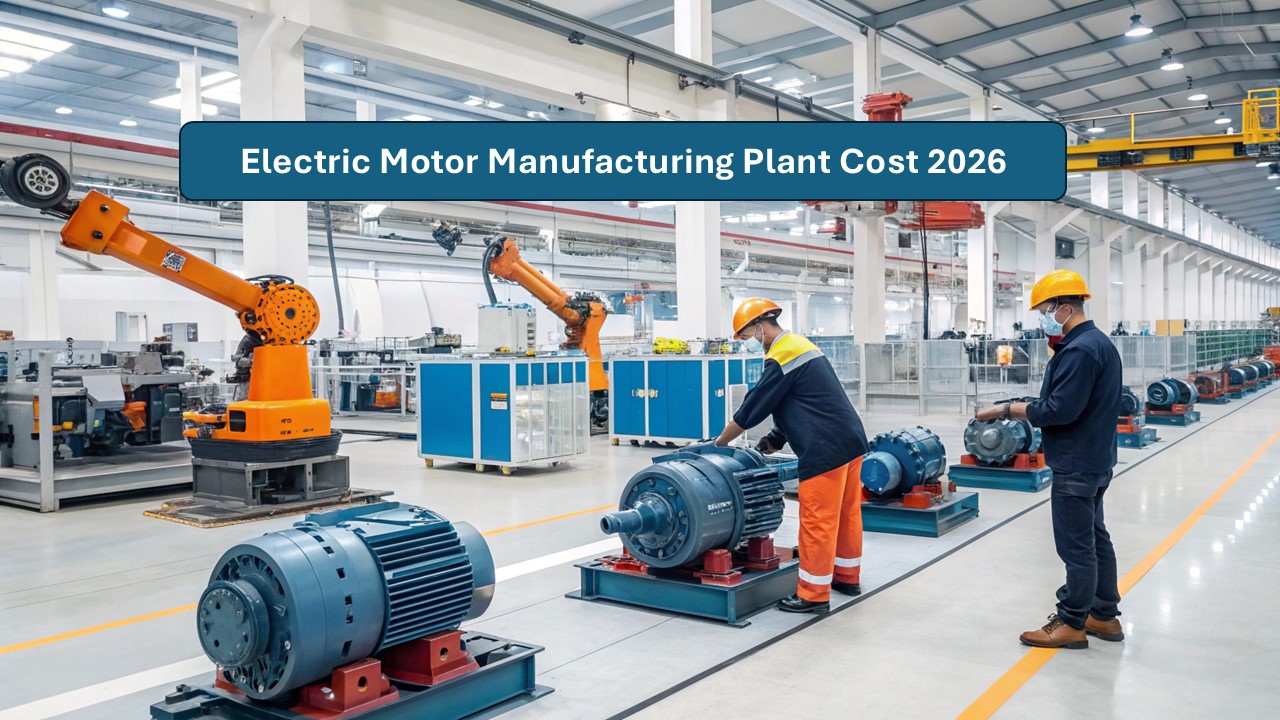
The Electric Motor Manufacturing Plant Project Report 2026 by IMARC Group delivers a complete feasibility study and investment roadmap for setting up a modern electric motor manufacturing facility. An electric motor is an electromechanical device that converts electrical energy into mechanical energy using electromagnetic principles. It plays a vital role across sectors such as automotive, industrial machinery, home appliances, robotics, HVAC systems, and renewable energy infrastructure.
The report comprehensively covers market trends, unit operations, raw material and utility requirements, technology and machinery needs, plant layout considerations, capital and operating cost structures, financial projections, and profitability analysis. This makes it a valuable tool for investors, entrepreneurs, and manufacturers seeking to enter or expand within the electric motor market.
Market Overview and Growth Potential
The global electric motor market is experiencing steady growth driven by rising industrial automation, increasing demand for electric vehicles (EVs), expanding renewable energy systems, and heightened adoption of energy-efficient industrial equipment. According to IMARC’s estimates, the electric motor market was valued at USD 119.02 Billion in 2025 and is projected to reach USD 159.70 Billion by 2034, exhibiting a CAGR of 3.3% from 2026 to 2034.
Growth in the automotive sector, particularly in EV production, is a significant catalyst for electric motor demand. Motors are also essential components in robotics, conveyor systems, pumps, compressors, fans, HVAC systems, and renewable energy applications such as wind turbines, contributing to diversified market opportunities.
Industrial automation and modernization, especially in developing economies, are creating robust demand for precision-engineered motors, while trends such as smart factories and electrification are fueling long-term market expansion.
Request for a Sample Report: https://www.imarcgroup.com/electric-motor-manufacturing-plant-project-report/requestsample
Plant Capacity and Production Scale
A typical electric motor manufacturing facility designed under the IMARC report framework recommends an annual production capacity of 1–2 million units. This scale is optimal for achieving economies of scale while maintaining flexibility to meet both domestic and export market demand.
The manufacturing process includes multiple stages such as raw material preparation, lamination stacking, stator and rotor assembly, winding and insulation, housing and bearing installation, balancing and testing, and final assembly and packaging.
This structured production flow enables efficient use of resources, enhanced quality control, and optimized throughput — all essential for cost-competitive operations in an increasingly dynamic market.
Financial Viability and Profitability Analysis
According to the IMARC Group’s financial projections, an electric motor manufacturing plant can achieve healthy profitability under typical market conditions:
• Gross Profit Margin: 25–35%
• Net Profit Margin: 10–15%
These margins reflect stable demand across automotive, industrial, and consumer segments, as well as the value added through precision engineering and specialized motor applications.
The report includes detailed financial modeling that accounts for projected revenues, operating expenses, depreciation, taxation, break-even analysis, return on investment (ROI), and net present value (NPV). Investors can use these models to make informed decisions about capital allocation and long-term profitability expectations.
Operating Cost Structure
Operating costs in an electric motor manufacturing facility are largely driven by raw materials and utilities. According to IMARC:
• Raw Materials: 70–80% of total operating expenses (OpEx)
• Utilities: 10–15% of OpEx
Raw materials — especially copper wire — represent the largest share of operating costs. Copper’s excellent electrical conductivity makes it a critical input for windings, while other materials like steel laminations, magnets, bearings, housings, and insulation also contribute to overall cost.
Utilities include energy for testing, heat treatment, compressed air systems, and general plant operations. Efficient energy management and reliable utility supplies are essential to control ongoing costs and maintain production efficiency.
Other operating expenditures include labor, maintenance, quality control, packaging, transportation, and environmental compliance — all necessary for smooth and compliant plant operations.
Capital Investment Requirements
Establishing an electric motor manufacturing plant requires a significant upfront investment in multiple areas:
• Land and Site Development: Acquisition, site preparation, access roads, drainage, and foundational works.
• Civil Works and Infrastructure: Construction of production halls, quality control labs, warehousing, administrative offices, sanitation, and safety systems.
• Machinery and Equipment: Specialized machinery such as winding machines, stamping presses for laminations, vacuum impregnation units, balancing machines, dynamic testing rigs, assembly lines, and automated handling systems.
• Utilities and Support Systems: Electrical installations, compressed air systems, water treatment, HVAC systems, fire safety, and environmental monitoring equipment.
While IMARC’s public summary does not disclose specific CapEx figures, its comprehensive breakdown of investment categories is designed to help investors assess capital needs, align budgets, and structure financial planning based on plant scale and regional cost factors.
Major Applications and Market Segments
Electric motors manufactured at the facility cater to a wide range of applications and sectors:
• Automotive Sector: Motors for electric and hybrid vehicles, auxiliary systems, and powertrain components.
• Industrial Machinery: Drive systems for conveyors, pumps, compressors, and robotics.
• Consumer Electronics & Appliances: Motors for HVAC systems, refrigerators, washing machines, and other household devices.
• Renewable Energy Infrastructure: Motors for wind turbines, solar trackers, and energy storage systems.
• Automation & Robotics: Drive solutions for robotics, smart systems, and intelligent manufacturing lines.
This diversified application base enhances the plant’s revenue potential and reduces dependency on any single sector.
Ask Analyst for Customization: https://www.imarcgroup.com/request?type=report&id=7662&flag=C
Why Invest in Electric Motor Manufacturing?
Investing in an electric motor manufacturing plant offers strong strategic advantages:
Growing Market Demand
The expanding adoption of electric vehicles, automated industrial equipment, robotics, and renewable energy systems is driving sustained demand for high-performance electric motors.
Stable Profitability Potential
Healthy projected gross and net profit margins support long-term returns on investment, even under competitive market conditions.
Diverse Application Base
Electric motors are essential components across multiple sectors, increasing market resilience and revenue diversification.
Technology Integration & Innovation
Modern manufacturing technologies, including automation, robotics, and smart quality control, drive operational efficiency while reducing costs.
Infrastructure Compatibility
Existing supply chains, skilled labor availability, and regional industrial clusters support scalable production and distribution networks.
Industry Leadership and Competitive Landscape
Key players in the global electric motor industry include multinational manufacturers that serve end-use sectors across automotive, industrial, consumer, and renewable segments. Leading firms such as ABB Ltd., Siemens AG, WEG S.A., Nidec Corporation, Regal Rexnord Corporation, Mitsubishi Electric Corporation, and Toshiba Corporation are recognized for their broad portfolios and global production capabilities.
These established companies set benchmarks in technology, quality standards, and market reach — offering insights for new entrants aiming to compete at scale.
Conclusion
The Electric Motor Manufacturing Plant Project Report 2026 offers a comprehensive, data-driven blueprint for designing, financing, and operating a modern electric motor manufacturing facility. With an annual capacity of 1–2 million units, strong profit margins (gross 25–35%, net 10–15%), and a clear cost structure dominated by raw materials and utilities, this industry presents a compelling investment opportunity. Supported by robust global market growth, expanding applications across automotive, industrial, consumer, and renewable sectors, and ongoing technological innovation, electric motor manufacturing stands as a resilient and profitable business venture for forward-thinking investors.
How IMARC Can Help?
IMARC Group is a global management consulting firm that helps the world's most ambitious changemakers to create a lasting impact. The company provide a comprehensive suite of market entry and expansion services. IMARC offerings include thorough market assessment, feasibility studies, company incorporation assistance, factory setup support, regulatory approvals and licensing navigation, branding, marketing and sales strategies, competitive landscape and benchmarking analyses, pricing and cost research, and procurement research.
Services:
- Plant Setup
- Factoring Auditing
- Regulatory Approvals, and Licensing
- Company Incorporation
- Incubation Services
- Recruitment Services
- Marketing and Sales
Contact Us:
IMARC Group
134 N 4th St. Brooklyn, NY 11249, USA
Email: sales@imarcgroup.com
Tel No:(D) +91 120 433 0800
United States: +1-201971-6302