
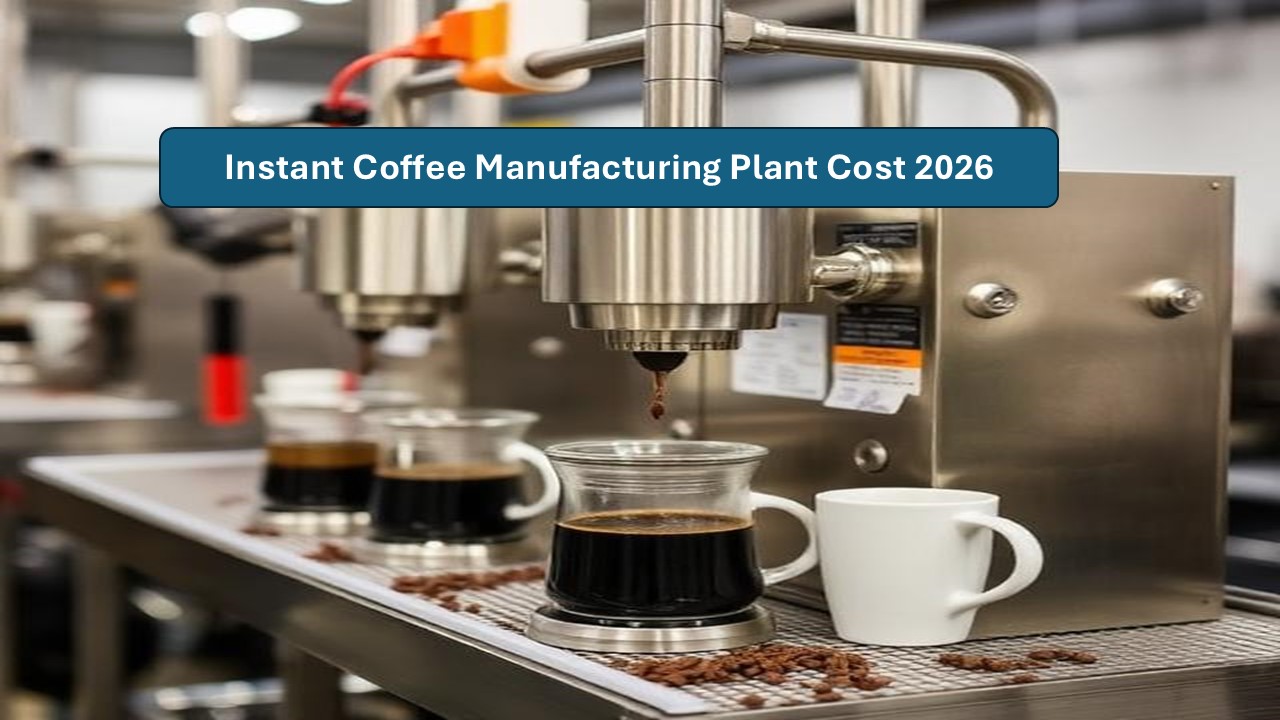
The Instant Coffee Processing Plant 2026 by IMARC Group provides a comprehensive feasibility study, market overview, process details, cost analysis, and investment guidance for setting up an instant coffee manufacturing facility. Instant coffee — a soluble form of brewed coffee produced through spray-drying or freeze-drying processes — dissolves quickly in hot or cold water, offering convenience and consistent flavor. As lifestyles become busier and urbanization increases, demand for ready-to-drink and quick-serve coffee products is expanding globally.
This feasibility report covers every critical aspect of establishment and operations, including plant setup, raw material requirements, machinery and technology needs, utility consumption, packaging, transportation, project economics, capital investment (CapEx), operating expenses (OpEx), profitability analysis, and financial projections such as return on investment (ROI) and net present value (NPV).
Market Overview and Growth Potential
The IMARC Group report estimates that the global instant coffee market was valued at USD 15.36 Billion in 2025 and is projected to reach USD 22.83 Billion by 2034, with a CAGR of 4.5% from 2026 to 2034. This growth is driven by rising demand for convenience beverages, growing urbanization, and expanded consumption across retail and foodservice channels.
Changing consumer lifestyles, increasing disposable incomes, and the expanding café culture contribute to increased uptake of instant coffee, especially in emerging markets. Mature markets such as North America and Europe show strong demand for premium variants and clean-label formulations, while the Asia-Pacific region — particularly India, China, and Southeast Asia — is experiencing accelerated growth as coffee becomes a daily beverage choice for broader populations.
Plant Capacity and Production Scale
According to the IMARC report, a proposed instant coffee manufacturing facility can be designed with a production capacity ranging between 5,000–20,000 metric tons (MT) per year. This capacity enables manufacturers to benefit from economies of scale while adapting to variations in market demand and product diversification strategies.
The manufacturing process involves multiple stages, including roasting, grinding, extraction, concentration, drying (spray or freeze drying), agglomeration, and packaging — each of which requires specific machinery and quality controls to ensure consistency in flavor, aroma, and solubility.
Request for a Sample Report: https://www.imarcgroup.com/instant-coffee-manufacturing-plant-project-report/requestsample
Financial Viability and Profitability Analysis
The financial analysis in the IMARC report highlights the competitive profitability potential of instant coffee manufacturing under normal operating conditions:
• Gross Profit Margin: 30–40%• Net Profit Margin: 12–20%
These healthy profit margins are supported by stable demand, value-added product applications (such as flavored blends and premium freeze-dried variants), and potential for export and private-label production. The report includes detailed projections covering income, expenditures, and break-even analysis — providing investors with comprehensive insights into expected returns and long-term sustainability.
Operating Cost Structure
The operating cost breakdown in the IMARC report reveals that raw materials constitute the largest portion of expenditures:
• Raw Materials: 70–80% of total operating expenses (OpEx)• Utilities: 10–15% of total OpEx
Green coffee beans — sourced from producing regions — form the key raw material, and their quality and price directly impact product cost and overall profitability. Utilities, including electricity, water, and steam required for roasting, drying, and packaging operations, are another significant expense. Other operating costs such as labor, maintenance, packaging, logistics, quality assurance, and environmental compliance are also included in the IMARC cost model but constitute a smaller proportion compared to raw material and utility costs.
Capital Investment Requirements
The IMARC feasibility report outlines the major capital expenditures (CapEx) for establishing a commercial instant coffee manufacturing plant:
• Land Acquisition and Site Development: Costs associated with selecting a site with reliable access to raw materials, transport infrastructure, utilities, and waste management systems.• Civil Works and Buildings: Construction of production halls, quality control laboratories, storage facilities, administrative offices, and utility infrastructure.• Machinery and Technology: Core equipment such as coffee roasters, grinders, extractors, evaporators, spray or freeze dryers, agglomerators, packaging machines, and quality testing instruments.• Utilities and Support Systems: Electrical installations, water supply, steam plants, compressed air systems, safety systems, and environmental compliance facilities.
The report’s CapEx chapter includes a detailed breakdown of capital costs, though exact figures require access to the full paid report.
Major Applications and Market Segments
The instant coffee products manufactured at the facility serve multiple market segments:
• Household Consumption: Prepared quickly as hot or cold beverage using sachets, jars, or refill packs.• Foodservice and Hospitality: Utilized in hotels, cafés, restaurants, quick-service chains, and catering operations.• Vending Machines: Installed in offices, hospitals, transport hubs, and educational institutions.• Food Processing: Used as a flavoring ingredient in bakery items, desserts, and confectionery products.
These diverse application areas broaden market reach and provide resilience against demand cycles in any one sector.
Why Invest in Instant Coffee Manufacturing?
Investing in instant coffee production offers several compelling advantages as outlined by IMARC:
High-Volume Consumer Staple
Instant coffee enjoys stable demand across all income levels, geographic regions, and age groups, making it a robust FMCG segment with consistent consumption patterns.
Scalable Production Economics
Manufacturing processes allow for efficient scaling, enabling consistent quality across various packaging options while serving general and premium market segments.
Lifestyle and Convenience Trends
Rapid urbanization and busy lifestyles increase reliance on convenient, ready-to-consume beverages, boosting demand for instant coffee globally.
Export and Brand Potential
Extended shelf life and ease of transportation make instant coffee suitable for export markets, enabling private-label manufacturing and brand development opportunities.
Product Innovation Opportunities
Flavored blends, low-caffeine products, and specialty freeze-dried options create avenues for product differentiation and higher profit margins.
These strategic advantages position instant coffee manufacturing as a promising investment for plant owners and beverage sector entrepreneurs.
Ask Analyst for Customization: https://www.imarcgroup.com/request?type=report&id=7305&flag=C
Industry Leadership and Competitive Landscape
The IMARC report identifies leading global manufacturers in the instant coffee industry, reflecting established brands and diversified product portfolios that serve various end-use markets. Key players include:
• Nestlé• Starbucks Corporation• Matthew Algie & Company Ltd.• Kraft Foods Inc.• Tata Consumer Products Limited• Strauss Group Ltd.• Jacobs Douwe Egberts• Tchibo Coffee International Ltd.
These companies set standards in quality, distribution reach, innovation, and global market presence, serving as competitive benchmarks.
Conclusion
The Instant Coffee Manufacturing Plant Project Report 2026 by IMARC Group offers a detailed, data-driven blueprint for establishing a high-capacity, profitable instant coffee production facility. With an annual production capacity of 5,000–20,000 MT, strong profitability potential (gross 30–40%, net 12–20%), and a cost structure dominated by raw materials and utilities, this venture presents a viable and strategic investment opportunity. Supported by rising global demand, diverse applications across consumption and industrial segments, and scalable production processes, instant coffee manufacturing stands out as a compelling business prospect in the food and beverage sector.
How IMARC Can Help?
IMARC Group is a global management consulting firm that helps the world's most ambitious changemakers to create a lasting impact. The company provide a comprehensive suite of market entry and expansion services. IMARC offerings include thorough market assessment, feasibility studies, company incorporation assistance, factory setup support, regulatory approvals and licensing navigation, branding, marketing and sales strategies, competitive landscape and benchmarking analyses, pricing and cost research, and procurement research.
Services:
- Plant Setup
- Factoring Auditing
- Regulatory Approvals, and Licensing
- Company Incorporation
- Incubation Services
- Recruitment Services
- Marketing and Sales
Contact Us:
IMARC Group
134 N 4th St. Brooklyn, NY 11249, USA
Email: sales@imarcgroup.com
Tel No:(D) +91 120 433 0800
United States: +1-201971-6302